
Euripides’ A N D R O M A C H E Directed by Maria Protopappa
~ When human justice fails
Nemesis restores balance
and the right of women to claim their place in the world ~
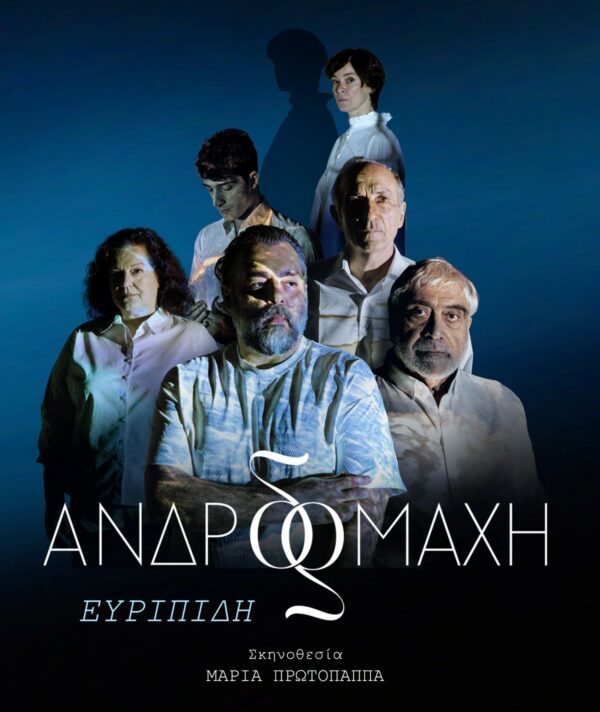 Maria Protopappa makes her directorial debut with Euripides’ “Andromache”, a tragedy that remains surprisingly timely, exploring the experiences of terror and destruction, individual choices and their profound influence on society.
Based on the translation by G. V. Tsokopoulos, the great director and actor Maria Protopappa dramaturgically and directorially elaborates on a work that raises crucial questions. With the dynamism that characterises her, she also takes on the role of Woman.
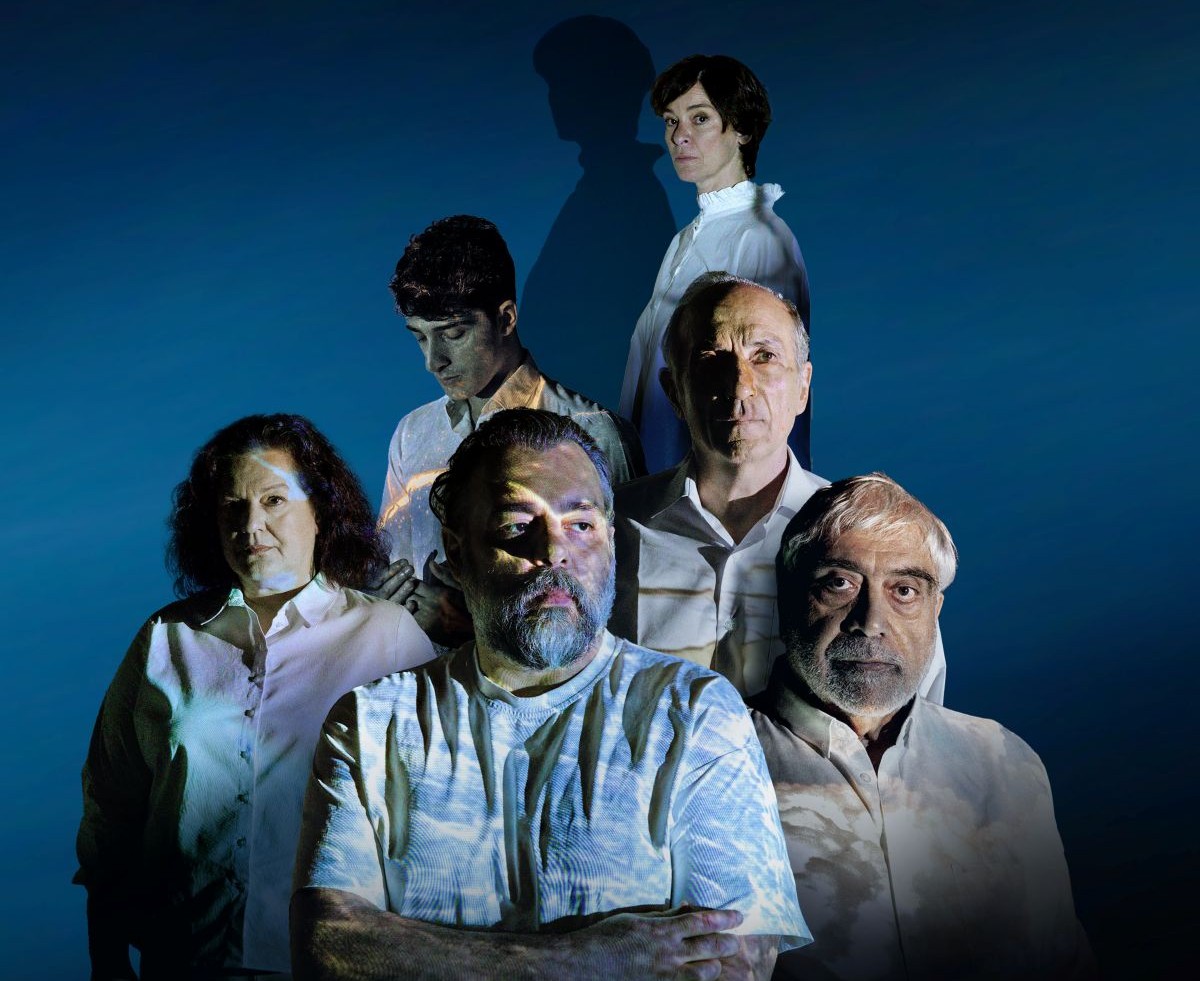
A unique acting ensemble plays the roles of the remaining tragic figures: Argyris Xafis plays Andromache, Tasos Lekkas plays Hermione, Giannis Dalianis plays Menelaus and Dimitris Piatas plays Peleus. In the role of Thetis we will see Stella Gika, while the Chorus consists of Dimitris Georgiadis, Dimitris Mamios, Konstantinos Passas, Giorgos Fasoulas, Giannis Manthos and Nontas Damopoulos.
Euripides’ tragedy
We are transported far from the great city-states, deep into the Greek countryside: to Thessaly, Phthiotis, and, finally, Thetideion. To the house of Neoptolemus, Achilles’ son. There we witness the dramatic conflict between two women: Andromache, widow of Hector and slave of Neoptolemus, and Hermione, wife of Neoptolemus. Filled with jealousy and envy, Hermione accuses Andromache that, because of her, Neoptolemus no longer loves her and does not wish to have a child with her, while he already has a child with Andromache. The conflict reaches its extremes when Menelaus, the king of Sparta and father of Hermione, decides to kill Andromache’s child, thus committing one of the most extreme acts of vengeance and arrogance.
Neoptolemus, the fierce, ruthless and irreverent hero of the Iliad, the one who cemented the victory of Greeks at Troy, now proves incapable of fulfilling his roles as a father, husband and leader. He flees in search of a cure at Apollo’s oracle in Delphi. His war-fuelled frenzy has tainted his marital bed, his house and his city. Before the eyes of the woman he irreparably wronged, he will receive the retribution known as “the Punishment of Neoptolemus”.
In an inversion of the heroic Iliad, Euripides in “Andromache” lays bare the arrogance of the Greeks and the illusion of their cultural superiority. The pre-war promises for a united and mighty nation are dispelled amid a landscape ripe with decay, ageing, fear and envy.
The burden of responsibility falls not only on the architects of destruction but also on those who placed their beliefs in them and played a part in the collapse of values through their complacency. It is the next generation that must pay the price. The country, now decimated, is represented by a grotesque Chorus of women, abandoned, fearful, resigned and bewildered.
The performance
In ancient art, from sculpture and painting to poetry, women are often depicted as symbols for their countries, protecting their homelands as a mother protects her children. Male figures, on the other hand, take on the strategic management and leading policies.
In Maria Protopappa’s dramaturgical and directorial approach to “Andromache”, Hermione and Andromache represent the ideals of their countries, while Menelaus and Peleus represent politics and power. Women do not simply constitute femininity; they have been constructed by men to represent the ideal role of the country and society. Thus, the Euripidean tragedy, while speaking of a home, is essentially concerned with the ethos and political management of a state in peacetime.
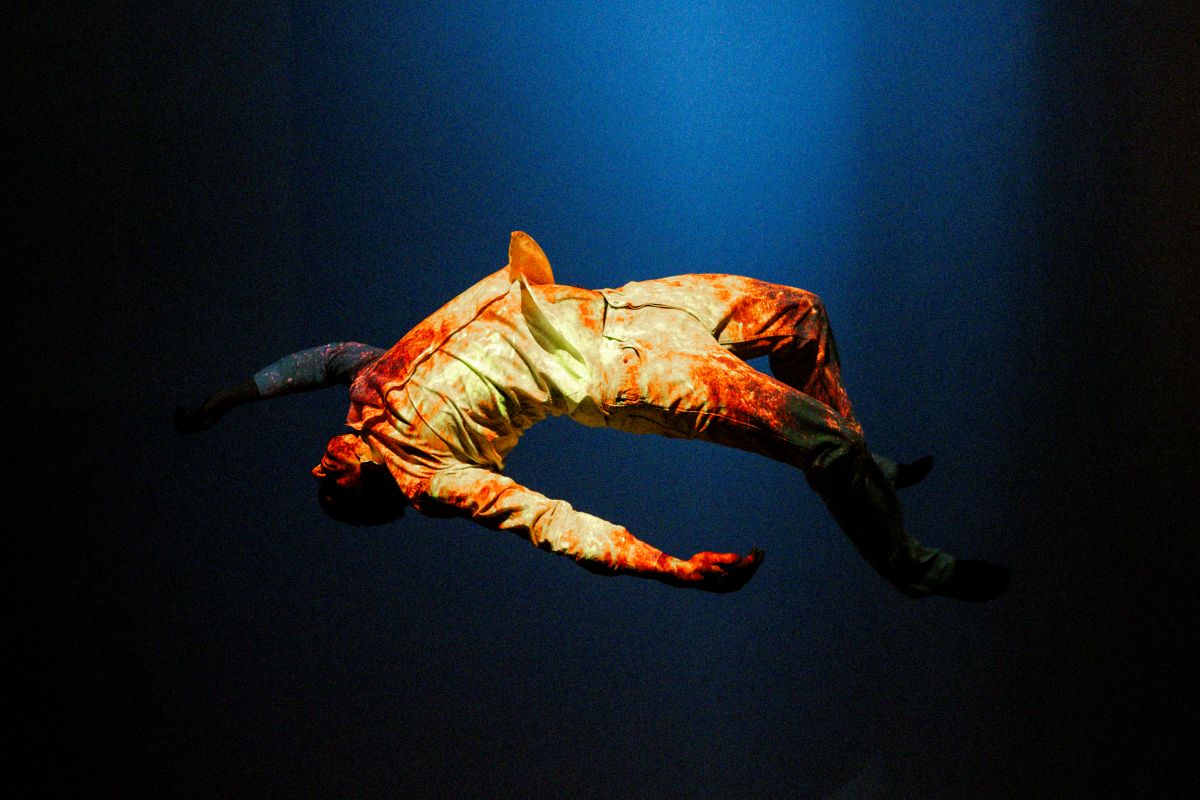
Euripides’ language breaks the rules of the era and is transformed into spells that vibrate with physicality, sensory memory and collective experiences. The director attempts to bring to light and transmit these precious and untranslatable elements not only verbally, but also kinesiologically, having an excellent group of Greek actors by her side.
Maria Protopappa’s note
“A woman prisoner of war and her child, an illegitimate child of rape, become a scandal in a small provincial town. Andromache’s insistence on surviving, full of hope and expectations for the future, and her courage to resist and speak out against the injustice she suffers, upset the local people in power, close houses, break alliances and expose the inequalities of society.
In the most intense way, Euripides highlights the arrogance of the powerful, the illusion of superiority of the “civilised” Greeks over the “savage” barbarians, revealing the fundamental injustices of their world.
Andromache becomes a symbol of resistance against social and political injustices. Although she suffers mistreatment and oppression, she refuses to succumb and remain silent. Her actions, her persistence and her voice, expose the status quo and overturn powerful social structures. The overthrow of expectations, the breaking of taboos and the denunciation of the irreparable evil that comes from power, become the driving force that changes the balance and brings Nemesis to the heart of society.
Revealing the moral poverty of power, Euripides does not stay on the surface; he digs deeper, observing how corruption and violence turn against those responsible, functioning as a natural, divine intervention. When human justice fails, Nemesis takes action, restoring balance and the right of women to claim their place in the world regardless of social prejudices.
In “Andromache”, the insistence on justice, the need for recognition and the recognition of truth transcend social conventions, revealing the gaps of power and its arrogance. Through the voice of Andromache, Euripides calls us to recognise the true value of the human spirit, endurance, strength and justice, which are always superior to the interests and contradictions of those in power.”
ARTISTIC & PRODUCTION CREDITS
Translation: G. V. Tsokopoulos
Direction – Dramaturgy: Maria Protopappa
Collaboration on dramaturgy: Elena Triantafillopoulou
Artistic Collaboration: Eleni Spetsioti
Set design – Lighting: Sakis Birbilis
Costume: Vana Giannoula
Music: Lolek
Movement: Alexandros Vardaxoglou
Vocal dramaturgy – Teaching: Anna Pangalou
Assistant director: Evi Nakou
Assistant to the set designer: Natasa Tsintikidi
Model construction: Olga Koutroumanou
Production direction & execution: Kart Productions
Communication – Press office: Maria Tsolaki
Advertising – Social media: Renegade Media, Vasilis Zarkadoulas
Promo photos – Video: Mariza Kapsampeli
Camera: Alexandros Georgiou
Photoshoot make-up artist: Irini Gatou
Video trailer of the performance: Thomas Palivos
Promo design: Giannis Stamatopoulos
Production: THEATROU TEHNI LP (ΘΕΑΤΡΟΥ ΤΕΧΝΗ Ε.Ε.)
Cast:
Woman: Maria Protopappa
Andromache: Argyris Xafis
Hermione: Tasos Lekkas
Menelaus: Giannis Dalianis
Peleus: Dimitris Piatas
Thetis: Stella Gika
Chorus (in alphabetical order): Dimitris Georgiadis, Nontas Damopoulos, Dimitris Mamios, Giannis Manthos, Konstantinos Passas and Giorgos Fasoulas
Admission:
General admission: EUR 23
Discounted admission (students, unemployed, people with disabilities): EUR 20
Pre-sale starts on 23rd June 2025 at www.ticketservices.gr. From 23rd July 2025 tickets will also be available for sale at the theatre box office.